Wednesday, June 20, 2012

Buckwheat Pancakes with Cardamom Syrup


If you come to my house on a Saturday morning, chances are good you'll have a good breakfast. I'm not sure when the tradition started, but it's been going on for a while. I love getting up before everyone else, turning the radio on, and putting together something sweet.


This Saturday was buckwheat pancakes with roasted cherries (sliced peaches in the original recipe) and cardamom cream syrup. This meant three components to put together; then again, I knew it would be a good while before anyone else would be ready for breakfast.


So I started by pitting a bunch of cherries (they're really great right now) and putting them in a baking dish with a bit of vanilla sugar and butter and letting them roast in a 375 oven for about 20 minutes. Then I boiled some raw (demerara) sugar with water and cardamom, added some cream, and boiled that down a bit.


By the time the syrup was done, so were the cherries. Both took some time but were very easy to put together. By the way, apricots are also really delicious cooked like the cherries.


Time for the pancakes: three kinds of flour plus baking powder, baking soda, and salt.


As Melissa suggested, I used the opportunity to clear out my fridge a bit: I had the remnants of some buttermilk and sour cream, and I topped that up with yogurt. Two cups of fermented milk products seemed like a lot, but my batter was actually a bit stiff, and so I added a bit more yogurt.


In the interests of saving a dish to wash, I just dumped in the egg, butter, honey, and buttermilk/yogurt and whisked it all together. Tip: if your honey is crystallized (as mine always seems to be), melt it with the butter.


On the griddle they went. I spooned these on a bit too generously and they had trouble getting done on the inside. I suggest smallish spoonfuls and flattening them a bit.


Look at how nicely they brown and puff up. I was a bit concerned because there was just one egg in the batter, but the buttermilk/baking soda combo seemed to be plenty to make these light and fluffy.


So here's the finished product with all three components. I loved the combination of fluffy pancakes and cardamom with the juicy cherries. Claire was feeling conservative and just had her pancakes with the classic maple syrup, and she really liked that. I'm pretty sure Sami tried (and liked) them both ways. In any case, this is a very good pancake recipe: a mostly whole-grain pancake that doesn't taste like one. I would happily eat them again on another Saturday.

Sunday, June 17, 2012

Whole Wheat Pizza with Cherry Tomatoes and Tuna


As we move into June, the calendar starts to explode: friends come to visit, girls have social events (and school only sporadically), work nears its end. In other words, it becomes difficult to plan a family meal at home. But one we managed to squeeze in was this pizza.


You have to do a bit of planning ahead for this pizza, in that the crust needs to rest in the refrigerator at least 24 hours. That's not a huge hardship, as the dough comes together in about 5-10 minutes (I mixed it by hand because the mixer was dirty). It's quite a simple dough: white and wheat flour (I used part bread flour and part all-purpose because the flour here is quite low in protein), salt, yeast, and water. I let it rise in an oiled zip-top bag because my fridge is too small and crowded to fit a bowl full of dough. The dough expanded quite a bit and crawled all over the fridge during its rest: give it space. 


On pizza night, all Claire and I had to do was prepare a few simple toppings and stretch out our crusts. You will notice that there is cheese involved: since there are no lactose-intolerant members of our family, we decided that a bit of cheese (mozzarella and some feta left over from a Greek salad) would be in order. Otherwise, we stuck to the program: cherry tomatoes, olives (yummy spicy ones from the market), sliced garlic, tuna.


Claire made her own pizza: she was able to get it quite round and put some nice crimped edges on it. And she was rather conservative with the toppings, not feeling very sure about the whole tuna-on-pizza thing.


We baked Claire's pizza and "my" pizza (I shared with Sami) in a 250 C convection oven for 15 minutes, switching the position every 5 minutes. I don't have a pizza stone, I didn't preheat the baking sheets, and I didn't use the broiler, and yet the pizza turned out really great!


(Here's my misshapen and more heavily loaded pizza) The crust was crackly and yet chewy, and the toppings created a fabulous balance of salty and briny and spicy. We were pretty conservative with the olive oil and did not salt the pizzas (really no need with the olives and the tuna and the feta).
I have to say this is one of the best pizzas I've made. I have a recipe for an overstuffed Chicago-style pizza that I also love, but a pizza like this seems more reasonable to incorporate into the daily routine. 
I had an extra ball of dough since Julia was not available for dinner, and I used it the next night for an appetizer pizza with olives, sun-dried tomatoes, and goat cheese. Unfortunately, I let it bake a bit too long (one pizza cooks faster than two: go figure!), but it also disappeared in a flash. This is a recipe I'll be going back to often.

Wednesday, June 6, 2012

Pasta with Garlic Scapes and Peas


I've known my husband since Culture Club was number one on the charts, and yet this whole time he carefully kept a secret from me that he recently revealed: he doesn't like peas. He will eat them, but he would prefer they not be on his plate. Hmmm...That revelation made this dish harder to carry out, but it was entirely successful--and yet so different from the original recipe that I'm going to post my own version.


Claire agreed to make this dish when I told her it involved pasta, pesto, and peas. Unlike her father, Claire adores peas. She eats them frozen from the bag--often a very large bag a week. But this time, in honor of spring, I had bought shell peas, so we shelled them and discussed our strategy for adapting the recipe.


The clue came in some creative reading I'd done with the recipe: I somehow understood that Melissa had mixed the peas and ricotta in with the pesto. Given that Sami admitted to liking split pea soup, we decided that if we puréed the peas, they would be less objectionable. So after being blanched, they went into the pesto after these delicious and expensive pine nuts that I almost burned.


Big dollops of goat's milk ricotta, and the dish was finished. It's a beautiful spring green color, and it tastes really, really good. I've seen recipes for "peacamole" that you can spread on crackers, and this "pea-sto" (that's for you, Sharmyn) would also be a great spread/dip. 
So here's my version of Melissa Clark's recipe for people who have no access to garlic scapes and who have family members who are pea-shy. You won't regret it.

About 1-1/2 cups freshly shelled (or frozen) peas
1/3 c. grated Parmesan
2 green onion tops, coarsely chopped
1 clove garlic, coarsely chopped
1 bunch basil, leaves torn from stems
1/4 c. pine nuts, carefully toasted (watch out: pine nuts go from white to burned in seconds)
1/3 c. olive oil
Juice of 1/2 lemon
1 lb. pasta--your choice. I used fresh fettuccine.
Ricotta or other creamy cheese of your liking
Freshly ground pepper
More grated Parmesan

In a large pot, bring some well-salted water to a boil. Add the peas and let cook for 2-3 minutes. Scoop out the peas with a large slotted spoon. Depending on the type of pasta you're using, add it to the boiling water now and let it cook while you make the pesto (if you're using a quick-cooking pasta like fresh fettuccine or angel hair, you might want to make the pesto first).
In a food processor, grind together the Parmesan, green onions, garlic, and basil. Add the pine nuts, oil, and peas and process until creamy. Season to taste with salt, pepper, and lemon juice.
When the pasta is done, scoop out about 1/2 cup of the pasta water before draining the pasta. Mix the pasta with the pesto. Serve topped with ricotta, pepper, and/or grated Parmesan. 

Wednesday, May 30, 2012

Panfried Asparagus with Ramps


 This was a dish that pleasantly surprised us, given its simplicity. It was a nice way to salute the late arrival of nice weather and one of my favorite vegetables, asparagus. Sadly, there's nothing like ramps here in France (I'm not sure I've ever eaten a ramp, frankly), so I went with green/spring onions and then supplemented with a typical spring herb, sorrel. I thought that was in keeping with the "sharp, biting" greens that Melissa writes about in the headnotes. Sorrel has a lemony taste that matches well with the other flavors in this dish.


The recipe is a snap to make. You slice and sauté the whites of the onions and some lemon slices (if possible, use an organic, thin-skinned lemon) in a good amount of butter. Then you add the asparagus and the sliced green onion tops (and sorrel), cover, and cook a while longer.


Finally, you add some eggs and let them fry: I put them in a 350 oven for 5 minutes. And that's it: a simple brunch-ish dish--for us, a light Sunday lunch.
As it turns out, I'm really the only one in the family who enjoys asparagus, and yet this dish disappeared quickly and effortlessly. The asparagus was perfectly cooked and, as Julia pointed out, "really well spiced". I didn't love the lemon bits: my lemons had thick skin that was pretty bitter. But other than that, I was really happy with this dish and once again, glad I made it.

Sunday, May 27, 2012

Skillet Chicken with Green Garlic/ Quinoa with Arugula


I made these dishes so long ago that it's a bit difficult to remember. Most of what I remember is that they are both super easy to put together and really delicious.


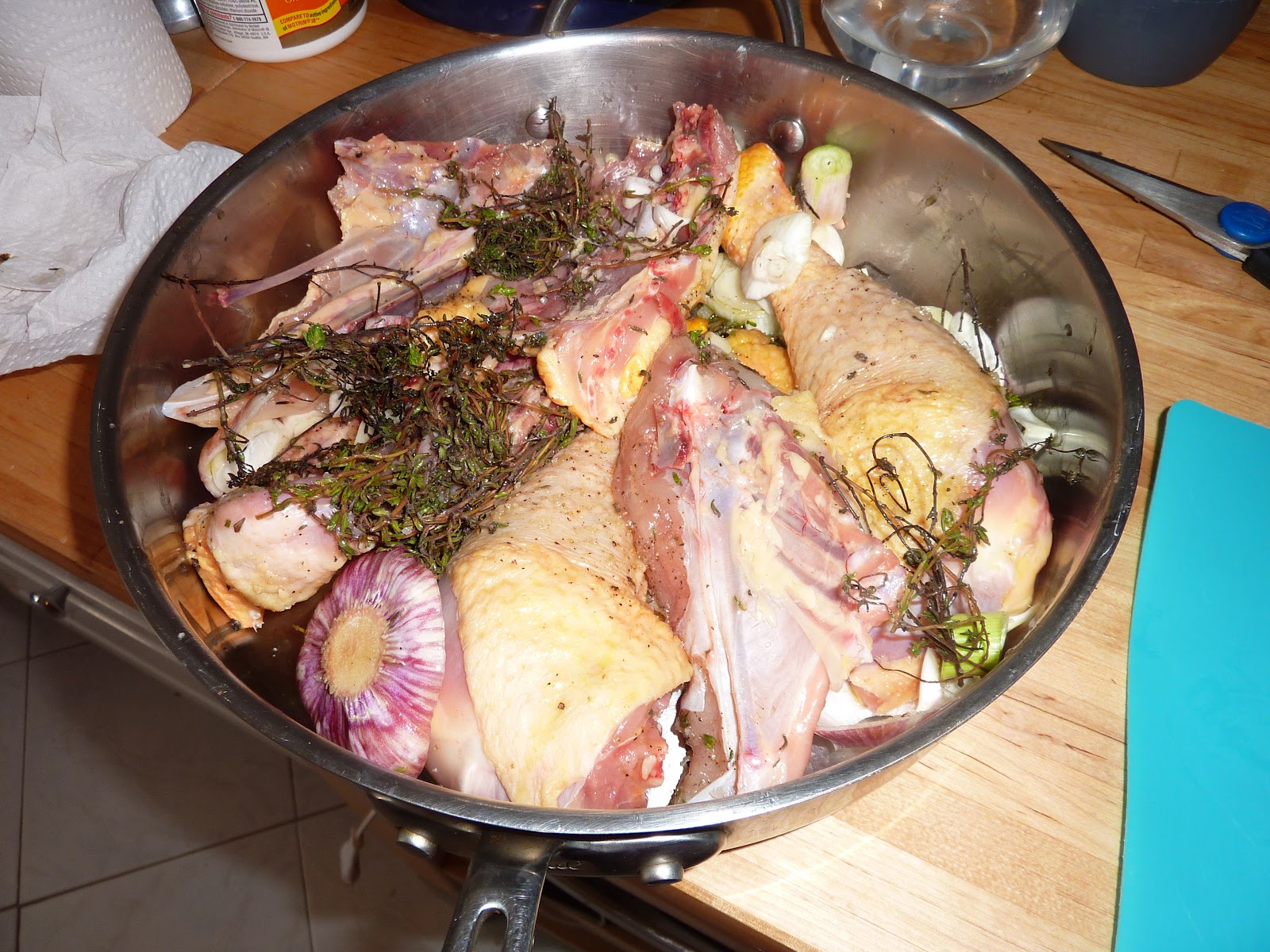
For the chicken, you toss together a cut-up chicken with salt, pepper, olive oil, a whole head of fresh garlic (sliced), and a ton of fresh thyme, and you let it sit for a while. Feeling a bit rushed, I tossed it all in the skillet, set the timer, and went back to my desk to grade some papers.

Then you put the pan over heat, cover it, and just let it cook for longer than you think is wise: about 10 minutes. You flip the chicken over, deglaze with a bunch of wine, and let it cook some more. And before you know it, before you believe it's possible, the chicken is all cooked.


You take the chicken out of the pan, add a bit more wine and some lemon juice/zest, deglaze a bit more, and thicken the sauce with some butter. That's it, and it's fabulous. While the chicken is cooking, you can make some Quinoa with Black Pepper and Brown Butter.


 Again, pretty darned easy. Bring some water to a boil in a largish pot, add your (rinsed) quinoa, and cook about 10 minutes. Drain the quinoa and scrape out the pot well. Put the pot back over the heat and brown a couple of tablespoons of butter in it. When that butter starts to smell fabulous, add some chopped garlic, then the quinoa, and then a bunch of arugula.


Stir that around until the arugula wilts, and you're done. Season it to taste with salt and black pepper.


As we were eating this, Sami proclaimed, "You know girls, if you gave Mommy a truck tire to cook, she'd find a way to make it delicious." Julia interpreted this as a back-handed insult to the quinoa/arugula thing (which she was devouring a large plate of), but I'm pretty sure he was just in love with the garlicky, savory sauce on the chicken. In fact, when I said there was more in the kitchen, he practically ran to serve himself. I love it when something simple like this has a big payoff in terms of pleasure. I highly recommend it.

Friday, May 18, 2012

Rhubarb, Strawberry, and Lemon Marmalade


This recipe was a bit of a stretch for me in many ways, but I decided to just go for it. So last Friday night before I went to bed, I started making my first batch of jam ever.
Note that this French rhubarb, compared its German cousin from a couple of weeks back, is shorter and slimmer, and probably has more attitude.


 I trimmed and sliced the rhubarb and most of those two baskets of very ripe strawberries, added lemon and sugar, and left the mixture to sit out overnight to macerate.


The next morning, it was time to finish the jam. I started by straining all the sugary juices out of the fruit. 


There was quite a lot of it. The jam making process to this point rather reminded me of making a pie filling the Rose Levy Berenbaum way.


 In any case, the syrup went on the stove with a candy thermometer. When I noticed that the syrup was boiling and the thermometer only registered 200, I realized I'd probably want to add the fruit at about 220 rather than the 230 called for.


 It seems really smart to cook the syrup first and then add the fruit for just a short time for maximum flavor and texture. Of course, most people I know who make jam on a regular basis use pectin (here in Europe, they sell sugar with pectin mixed in so that it's super easy to make jam) and thus don't cook their jam quite as much.


 The jam boiled and boiled. I tried the frozen saucer trick, but even after 15 minutes, I wasn't seeing a wrinkle. I gave up and decided it was done.


I took a rather European approach to my jars: I used old jars that I had run through the dishwasher. My German host mother and my mother-in-law have done this for years and have never had problems. And there it was: my first batch of jam. It wasn't that difficult (besides the inaccurate thermometer problem, which is one that seems to haunt me) and may give me the courage to branch out and try other jams.


So here is my Sunday morning café au lait, croissant, and strawberry-rhubarb jam. I liked this jam: it was a bit sweeter than I would ideally have liked (even though I halved all the ingredients except the lemon) but has a fresh, balanced taste. When the others finally showed up at breakfast, I offered them some homemade jam. "Wow, you made this?" Julia asked. "But you don't even like strawberry jam!" It's true: I enjoyed the freezer strawberry jam that my mom made, but I generally object to cooked strawberries. So chalk this one up to my sheer determination to try a new family of recipes. I can't say I regret it. 

Friday, May 11, 2012

Pan-Roasted Pacific Halibut with Spring Onions


This was a pretty simple recipe based on the idea that spring onions are mild and delicious and match well with a nice piece of fish. Balsamic vinegar doesn't hurt, either.


I'm not sure whether what I got at the market truly qualifies as spring onions: we get these just about year-round. What's hard to find on the market here are actual scallions. But the "white onions" on the market now seem smaller and fresher than in other seasons, so I'll just believe that they're the right kind. Whatever these were, I dutifully trimmed them and cut them into quarters (halves for the smaller ones). Unlike Melissa, who claims she can cut hers tear-free, I had some eye irritation issues. No matter.


The onions then go in a skillet with olive oil and some salt, pepper, and thyme: first covered and then uncovered. As they cooked, I thought of the Slate article I had recently read about how long it really takes to caramelize onions (the author points the finger at Melissa Clark for underestimating the time it takes). Mine never really caramelized, but they got soft and nicely browned, so I decided to leave well enough alone.


So I deglazed the pan with balsamic vinegar and honey and had a sauce that was perfect for at least three of us: the girls and I love caramelized onions, and Claire has a special fondness for balsamic vinegar. Sami, however, is agnostic on the onion.


This part of the recipe was the downside for Julia and Claire: Julia doesn't eat fish, and Claire doesn't much like it, although I always make her try it. I went with the "colin" or haddock that I often use in fish dishes: I seared the skin side on the stove and put the skillet in a hot oven to finish for about 10 minutes or so.


And voilà: fish plated with onions and potatoes (fancy spring potatoes from Noirmontier). The portions were a bit small, but everyone liked the dish. Claire ate all her small piece of fish, because the onions helped it go down. Sami ate all his onions: perhaps the fish helped them go down, though he did in fact praise the sauce. Julia liked the sauce with her potatoes. And I liked it, too. It's a simple and elegant dish that really does highlight good ingredients, and it was light and flavorful. Now that spring seems to finally have arrived, this is the kind of food I want to eat more of!